Charles Howard Hodges
1764 – 1837
Notable works

._Echtgenote_van_Pieter_Meijer_Warnars,_boekhandelaar_te_Amsterdam_Rijksmuseum_SK-A-661.jpeg)
.jpg)

Early life Charles Howard Hodges was born in London in 1764, into a modest family that could afford a basic education but not the patronage networks typical of the British academy. Little is recorded about his formal training, but contemporary accounts suggest that he apprenticed with a London portraitist, absorbing the prevailing conventions of the late Georgian school—sharp observation, restrained colour, and a focus on the sitter’s status. By his mid‑twenties, Hodges had begun to travel, a common practice for ambitious artists seeking commissions beyond the saturated English market. His first documented move was to the Dutch Republic, where the political upheavals of the 1790s created a demand for portraiture among the emergent bourgeoisie and the new ruling elite.
Career and style Arriving in the Netherlands around the turn of the 19th century, Hodges quickly established a studio in Amsterdam. The city’s thriving commercial class, as well as the court of Louis Bonaparte, offered ample opportunities for a portraitist with a polished English technique. Hodges’s style blended the meticulous draftsmanship of his British upbringing with the softer, more atmospheric lighting favoured by Dutch painters. His sitters are rendered with a dignified calm, the compositions often framed by simple drapery or a modest interior that hints at the subject’s profession or rank. While he never aligned himself with a formal movement, his work reflects the transitional aesthetic of the era—bridging neoclassical restraint and the early Romantic interest in individual character.
Signature techniques Hodges is distinguished by several recurring technical choices. First, his handling of flesh tones is subtle; he layered thin glazes of warm ochre and muted pink to achieve a lifelike translucency. Second, his backgrounds are typically muted, employing a limited palette of earth tones that keep the viewer’s attention on the sitter’s face and attire. Third, he employed a fine, almost stippled brushstroke for details such as hair, lace, and jewellery, allowing textures to emerge without overwhelming the overall harmony. Finally, Hodges often used a faint chiaroscuro to model the head, a nod to the Dutch masters, while retaining the crisp edge that characterises English portraiture.
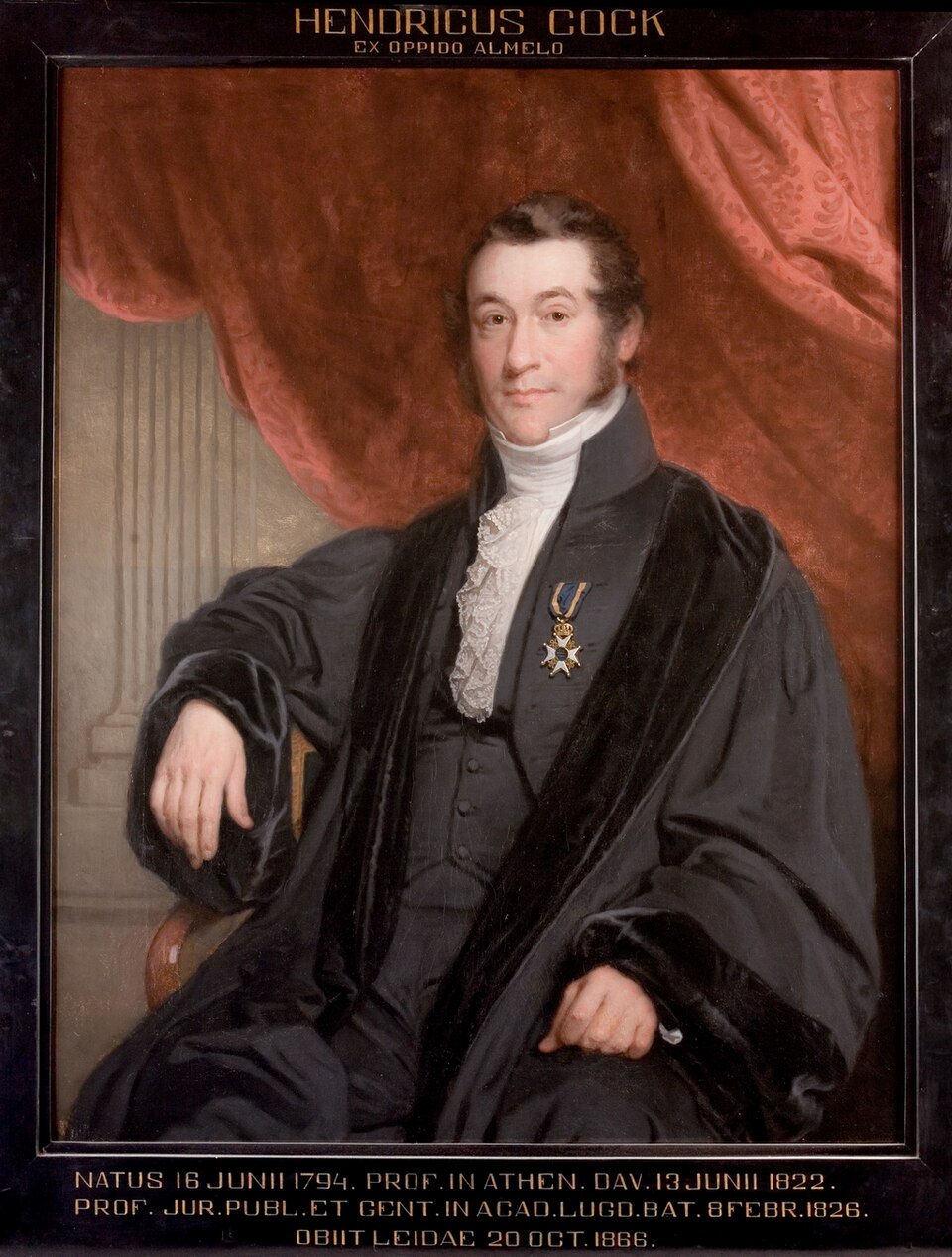
Major works - **Portrait of Louis Napoleon, King of Holland (1809)** – This official portrait captures the young monarch in a regal yet approachable pose. Hodges placed the king against a restrained backdrop, allowing the lavish silk coat and embroidered epaulettes to dominate the visual narrative. The work demonstrates Hodges’s ability to balance the pomp of royal representation with the intimacy expected in portraiture. - **Portrait of Jacoba Vetter, Wife of Pieter Meijer Warnars, Bookseller in Amsterdam (1823)** – In this domestic scene, Hodges renders Jacoba Vetter with a soft, contemplative expression. The sitter’s modest clothing and the presence of a bookcase subtly reference her husband’s profession, while the delicate rendering of her veil showcases Hodges’s skill in depicting translucent fabrics. - **Portrait of Willem van Loon (1794‑1847) (1815)** – Van Loon, a prominent merchant, is depicted seated beside a table laden with trade‑related objects. Hodges’s use of warm lighting emphasizes the sitter’s confidence, and the inclusion of a globe in the background hints at his international connections. - **Portrait of Anna Louisa Agatha van Winter (1793‑1871) (1815)** – This portrait of the young Anna Louisa highlights Hodges’s talent for capturing youth. The sitter’s luminous skin and the subtle smile suggest a genteel optimism, while the restrained background underscores her aristocratic lineage. - **Portrait of Henricus Cock, professor of Law in Leiden (1801)** – Here Hodges portrays the academic in a scholarly setting, surrounded by books and a small bust. The portrait’s composition reflects the intellectual gravitas of the sitter, with Hodges employing a cooler colour scheme to convey the seriousness of the legal profession.
Influence and legacy Charles Howard Hodges occupies a niche within early‑19th‑century Dutch portraiture, representing the cross‑cultural exchange between Britain and the Netherlands. Though never a household name in his native Britain, his works became part of the visual documentation of Dutch society during a period of rapid political change. Contemporary Dutch historians cite Hodges as an example of how foreign artists adapted to local tastes, influencing younger Dutch painters who sought to blend international techniques with national traditions. Today, his paintings are held in several Dutch museums and private collections, valued both for their artistic merit and for the insight they provide into the era’s social hierarchy. Hodges’s legacy endures as a testament to the mobility of artistic talent and the enduring appeal of the portrait genre.
Frequently asked questions
Who was Charles Howard Hodges?
Charles Howard Hodges was a British portrait painter (1764‑1837) who spent most of his career in the Netherlands, becoming a leading portraitist of Dutch aristocracy and officials.
What artistic style or movement is Hodges associated with?
Hodges did not belong to a formal movement; his work fuses English portrait tradition with Dutch tonal subtlety, reflecting the transitional neoclassical‑to‑early Romantic period.
What are his most famous works?
His best‑known paintings include the 1809 portrait of King Louis Napoleon of Holland, the 1823 portrait of Jacoba Vetter, and the 1815 portraits of Willem van Loon, Anna Louisa Agatha van Winter, and professor Henricus Cock.
Why is Hodges important in art history?
He exemplifies the cultural exchange between Britain and the Netherlands in the early 19th century and provides a detailed visual record of Dutch elite society during a period of political transformation.
How can I recognise a Charles Howard Hodges painting?
Look for finely rendered flesh tones, muted earth‑tone backgrounds, subtle chiaroscuro on the face, and meticulous detailing of fabrics and accessories that combine English precision with Dutch atmospheric lighting.