Charles Dana Gibson
1867 – 1944
In short
Charles Dana Gibson (1867–1944) was an American illustrator best known for creating the Gibson Girl, the iconic image of the confident, fashionable American woman at the turn of the twentieth century.
Notable works

Early life
Charles Dana Gibson was born on December 6, 1867 in the Roxbury district of Boston, Massachusetts. He was the son of a prominent Boston family; his father, William James Gibson, was a successful merchant, and his mother, Mary (née Dana) Gibson, encouraged his early interest in drawing. Gibson showed talent for sketching from a young age, copying the work of contemporary cartoonists and practicing with pen and ink on any available surface. After completing his secondary education, he enrolled at the Art Students League of New York, where he received formal training in drawing, anatomy, and composition. A brief period of study in Paris exposed him to European illustration styles and reinforced his preference for clear line work and narrative illustration.
Career and style
Returning to the United States in the early 1890s, Gibson secured his first regular commissions from leading periodicals such as *Life* and *Harper's Weekly*. The rapid growth of mass‑circulation magazines created a demand for striking visual content, and Gibson’s crisp, easily reproducible pen‑and‑ink drawings fit the medium perfectly. His style blended realistic anatomy with a light, often humorous, exaggeration of gesture and expression. He favoured a clean line, subtle cross‑hatching, and a restrained palette of black on white, which allowed his work to be reproduced faithfully in the printing processes of the day.
The central motif of his career was the "Gibson Girl" – an idealised yet approachable representation of the modern, independent woman. The figure appeared in countless magazine spreads, advertisements, and postcards, and quickly became a cultural shorthand for the aspirations of the emerging middle class. While the Gibson Girl was a product of a commercial market, Gibson’s broader oeuvre reflected a keen observation of social customs, leisure activities, and urban life.
Signature techniques
Gibson’s illustrations are distinguished by several recurring technical choices:
1. Pen‑and‑ink line work – He employed a fine sable brush or dip pen to produce smooth, continuous lines that defined form without heavy shading. 2. Cross‑hatching for texture – Subtle layers of hatching added depth to clothing folds, hair, and background elements while maintaining the overall flatness required for mass printing. 3. Narrative composition – Gibson often placed his figures within a clear, readable scene, using architecture or interior décor to frame the action and guide the viewer’s eye. 4. Expressive posture – Even static portraits convey a sense of movement; the Gibson Girl, for example, is frequently shown in a relaxed stance that suggests confidence and poise. 5. Limited tonal range – By restricting the use of dense black to the foreground and keeping backgrounds light, Gibson ensured that his images remained legible at small sizes.
These techniques combined to create illustrations that were instantly recognisable and highly adaptable to the commercial demands of magazines, advertisements, and early cinema promotion.
Major works
### Gibson Girl
The Gibson Girl emerged in the mid‑1890s and dominated visual culture for the next two decades. She is characterised by an S‑shaped silhouette, a confident pose, and an attire that balanced elegance with practicality – often a flowing skirt, a high‑collar blouse, and a hat perched at a jaunty angle. The image appeared on the cover of *Life* magazine, in newspaper supplements, and on a range of consumer goods, cementing Gibson’s reputation as a leading commercial illustrator.
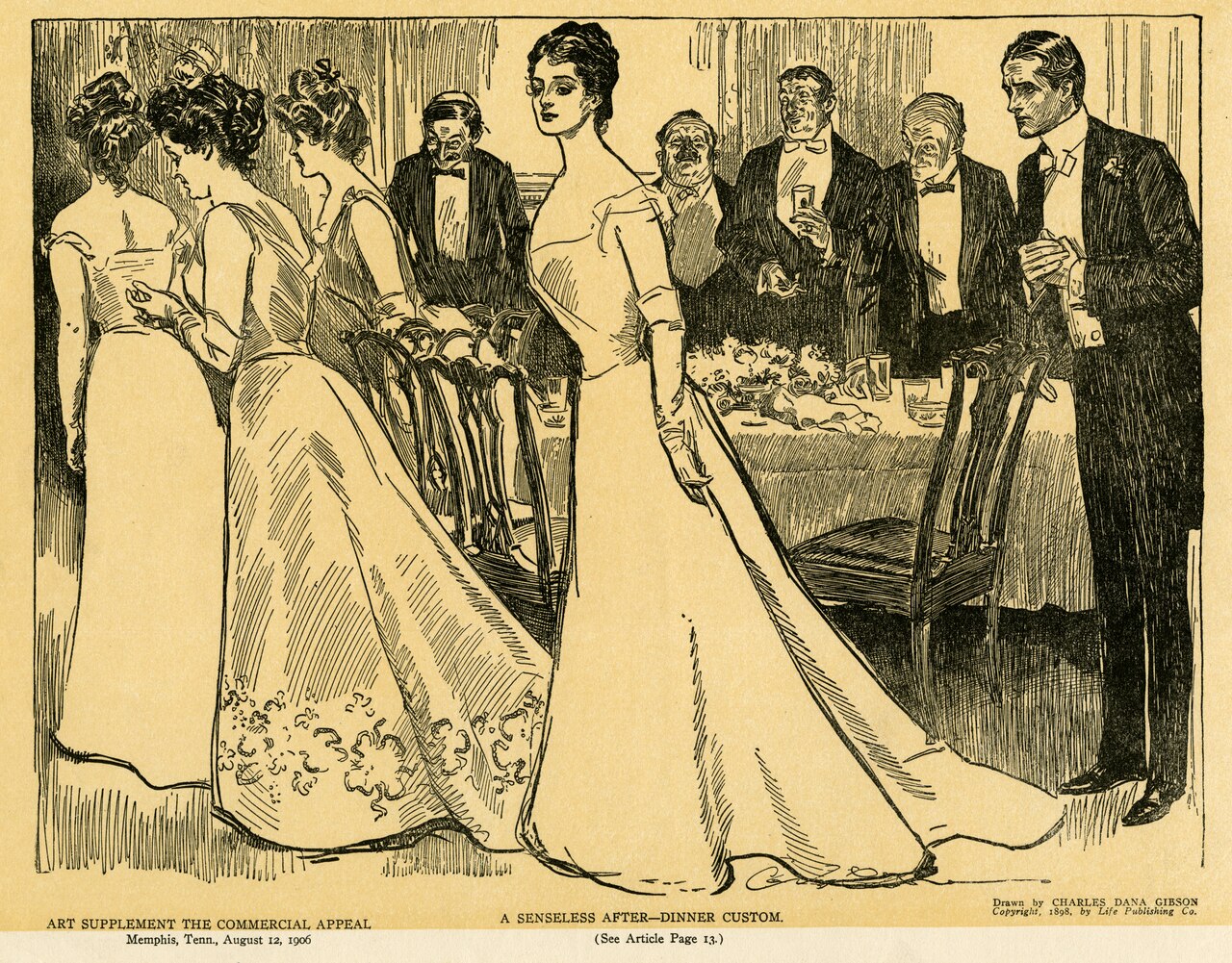
### A Senseless After‑Dinner Custom (1898)
This pen‑and‑ink illustration depicts a group of well‑dressed gentlemen engaged in a frivolous, exaggerated conversation after a formal dinner. Gibson uses subtle facial expressions and body language to satirise the pretensions of the upper‑class social ritual. The work demonstrates his skill at capturing humour without resorting to caricature, and it exemplifies the social commentary that underpinned many of his magazine pieces.
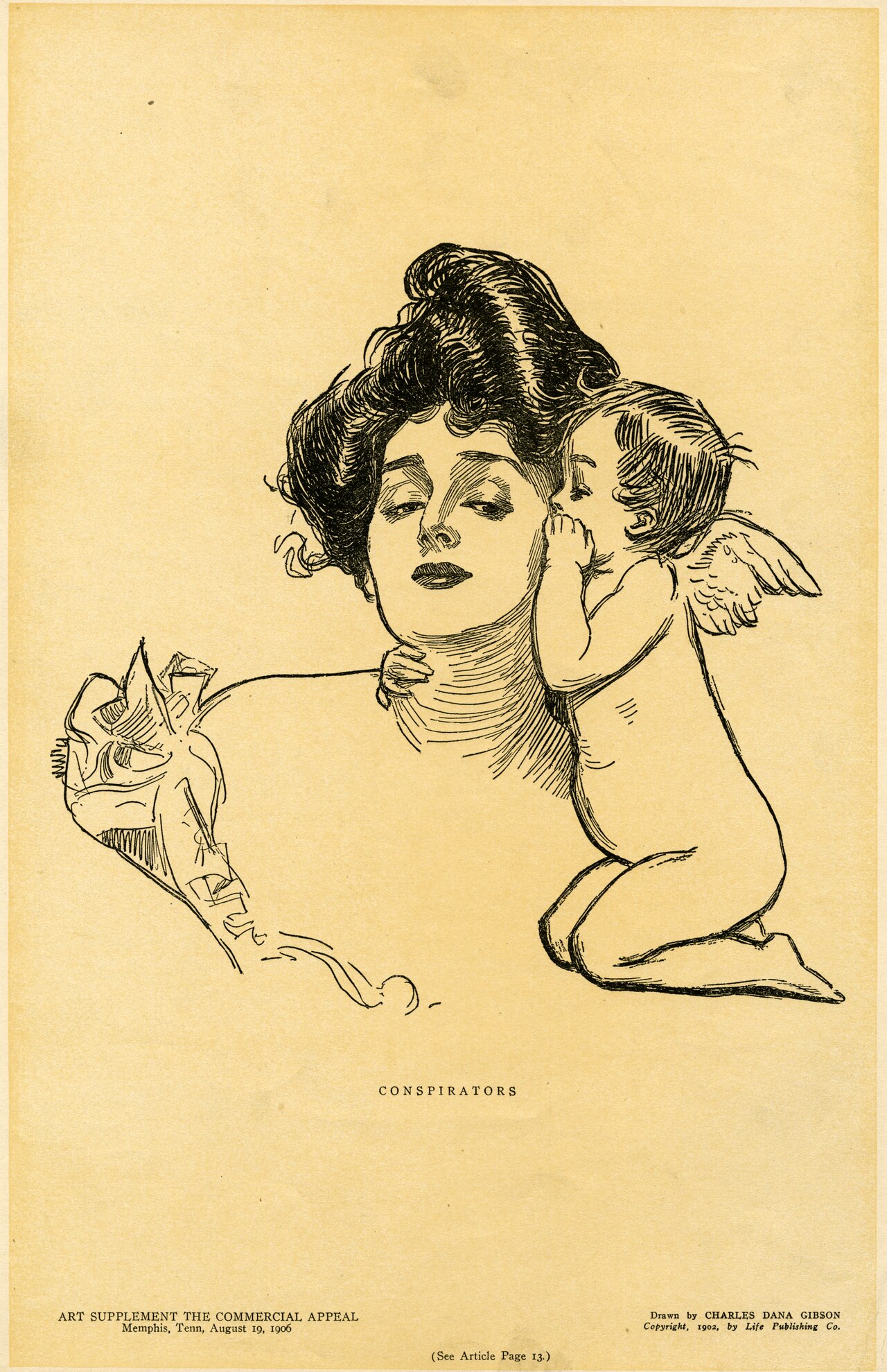
### Conspirators (1902)
In *Conspirators*, Gibson portrays three men huddled over a table, plotting with a mixture of secrecy and mischief. The drawing is notable for its tight composition and the way Gibson renders the shadows of the room through delicate hatching. The piece reflects the artist’s fascination with the private moments of public figures, a theme that resonated with readers who enjoyed a glimpse behind the façade of respectability.
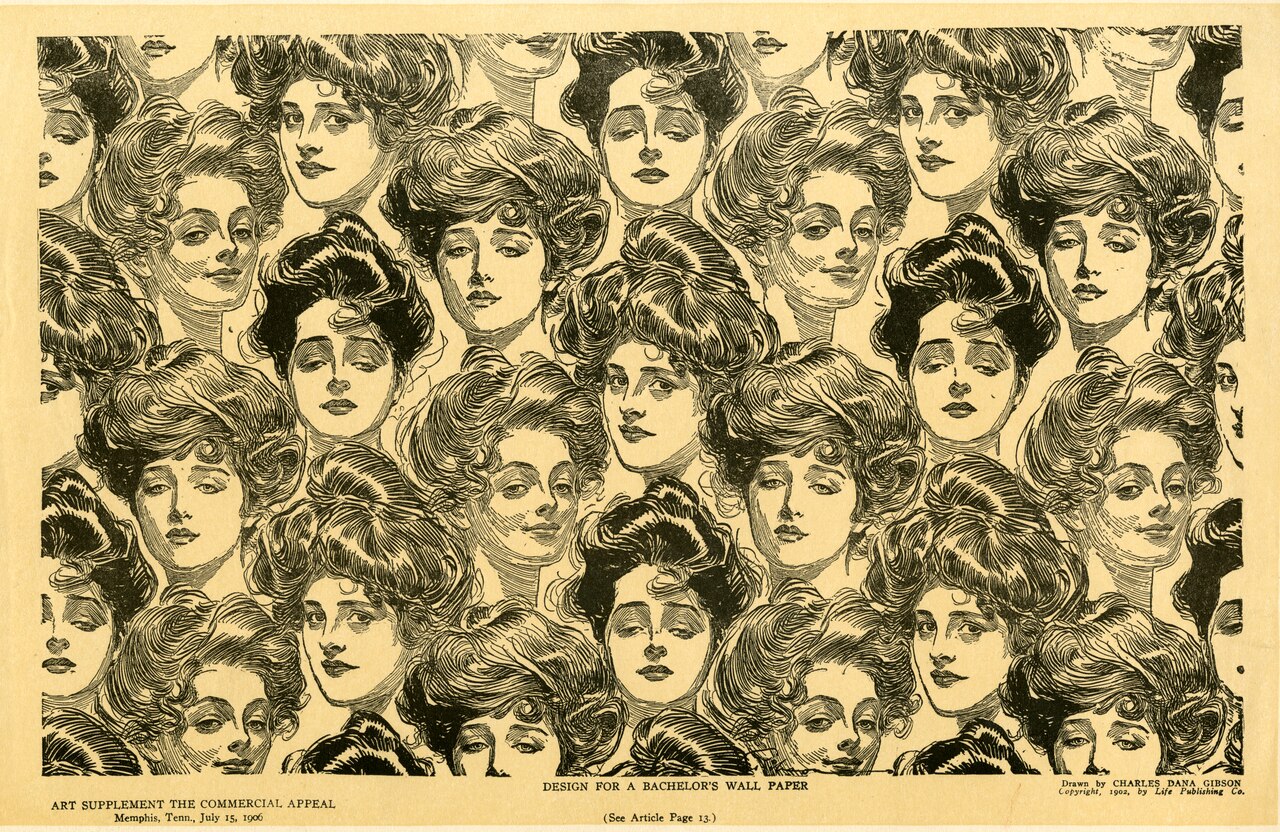
### Design for a Bachelor’s Wallpaper (1902)
This decorative composition was created for a commercial client seeking a pattern suitable for a bachelor’s apartment. Gibson incorporated stylised motifs of musical instruments, tobacco pipes, and geometric borders, all rendered with his signature line work. The design illustrates his versatility: beyond narrative illustration, Gibson was capable of producing ornamental graphics that blended artistic flair with practical interior design.
Influence and legacy
Charles Dana Gibson’s influence extends far beyond the immediate popularity of the Gibson Girl. His work helped shape the visual language of advertising in the early twentieth century, establishing a template for the portrayal of aspirational lifestyle imagery. The clean line and narrative clarity that characterised his illustrations anticipated the aesthetics of later comic‑strip artists and, indirectly, the modern graphic novel.
The Gibson Girl also informed contemporary fashion, inspiring designers to create clothing that echoed the silhouette’s elegance and freedom of movement. In the realm of popular culture, the figure became a reference point in films, literature, and later feminist discourse, where scholars debate whether the Gibson Girl empowered women or reinforced a narrow standard of beauty.
Artists such as John Singer Sargent, Norman Rockwell, and later cartoonists like Hergé cited Gibson’s ability to combine technical precision with storytelling as a model for their own practice. Moreover, the reproducibility of his work set a precedent for the mass‑media visual culture that dominates today’s digital environment.
Gibson continued to work until his death in Manhattan on August 14, 1944. Posthumously, his original drawings have been exhibited in major museums, and his sketches are studied in art‑history courses as exemplars of the Golden Age of Illustration. The enduring recognisability of his line work ensures that Charles Dana Gibson remains a pivotal figure in the narrative of American visual art.
---
*Word count: approximately 960*
Frequently asked questions
Who was Charles Dana Gibson?
Charles Dana Gibson (1867–1944) was an American illustrator best known for creating the Gibson Girl, an iconic image of the confident, fashionable woman of the early twentieth century.
What artistic style or movement is he associated with?
Gibson worked within the commercial illustration tradition of the Golden Age of Illustration, employing crisp pen‑and‑ink line work, narrative composition and subtle humour.
What are his most famous works?
His best‑known creations are the Gibson Girl, the illustration "A Senseless After‑Dinner Custom" (1898), "Conspirators" (1902) and the decorative "Design for a Bachelor’s Wallpaper" (1902).
Why does Gibson matter to art history?
Gibson shaped early twentieth‑century visual culture, influencing advertising, fashion, and later comic‑strip art; his Gibson Girl became a cultural shorthand for modern womanhood.
How can I recognise a Gibson illustration?
Look for clean, fluid pen‑and‑ink lines, restrained cross‑hatching, elegant yet lively figures, and a clear narrative scene that often includes subtle social commentary.