Bernardo Parentino
1437 – 1531
In short
Bernardo Parentino (1437–1531) was a Venetian Renaissance painter born in Poreč who worked mainly in Padua. He is known for religious panels such as The Adoration of the Magi and for decorative designs, and his oeuvre is sometimes confused with that of a contemporary monk of the same name.
Notable works

_-_Saint_Sebastian_-_RCIN_403487_-_Royal_Collection.jpg)
_-_Musicians_-_1628_-_Gem%C3%A4ldegalerie.jpg)
Early life Bernardo Parentino was born in 1437 in the coastal town of Poreč, then part of the Republic of Venice. Little is recorded about his family background, but the proximity of Poreč to the artistic centres of the Venetian mainland suggests that he was exposed to the flourishing visual culture of the Adriatic shore from an early age. He likely received his initial training in a local workshop before moving to Padua, a city that, in the mid‑15th century, was a vibrant hub for artists attracted by the patronage of the university and the civic authorities.
Career and style Parentino’s professional activity is documented primarily in Padua, where he produced altarpieces, devotional panels and ornamental designs for both ecclesiastical and secular patrons. Operating within the Venetian school, his work reflects the colouristic richness and atmospheric light that characterised the regional style, while also showing an awareness of the emerging principles of linear perspective introduced by the Florentine masters. Throughout his career he balanced the demands of narrative religious subjects with a keen interest in decorative motifs, a duality that was common among Venetian artists who supplied both painted and ornamental programmes for churches and private chapels.
The artist’s output spans the latter half of the 15th century into the early decades of the 16th, a period during which the Venetian Republic experienced a flourishing of artistic production. Parentino’s commissions were often linked to local confraternities and monastic communities, which explains the prevalence of saints and biblical episodes in his pictorial repertoire. His later years saw a gradual shift toward more secular themes, as evidenced by his designs for candelabra, allegorical figures and ornamental reliefs.
Signature techniques Parentino’s paintings are distinguished by several recurring technical features. First, he employed a luminous palette dominated by warm ochres, deep blues and vibrant reds, achieving a harmonious colour balance that enhanced the narrative focus of his scenes. Second, his handling of line and contour was delicate; figures are rendered with fine, almost filigree outlines that convey a sense of grace and poise. Third, he incorporated a subtle modelling of light and shadow, which, while not as rigorous as the Florentine perspective experiments, nonetheless provides a convincing sense of three‑dimensionality.
In his decorative designs, Parentino demonstrated a mastery of intricate patterning. The ornamental reliefs and candelabrum sketches reveal a preference for interlaced foliage, scrollwork and classical motifs, all executed with precise draughtsmanship. This attention to decorative detail aligns him with the broader Venetian tradition of integrating fine art and applied art, a hallmark of the period’s aesthetic sensibility.
Major works - **The Adoration of the Magi (1475)** – This altarpiece presents the traditional gathering of the three kings around the infant Christ. Parentino’s composition is notable for its balanced grouping of figures and the use of rich, saturated colours that draw the eye toward the central holy family. The background features a stylised architectural setting that hints at emerging perspective techniques without compromising the intimate atmosphere of the scene.
- Saint Sebastian (1480) – Executed as a devotional panel, the work portrays the martyr saint pierced with arrows, yet Parentino softens the dramatic tension through a calm, almost serene expression on Sebastian’s face. The painter’s skill in rendering the human form is evident in the careful rendering of musculature and drapery, while the subdued colour scheme underscores the spiritual gravity of the subject.
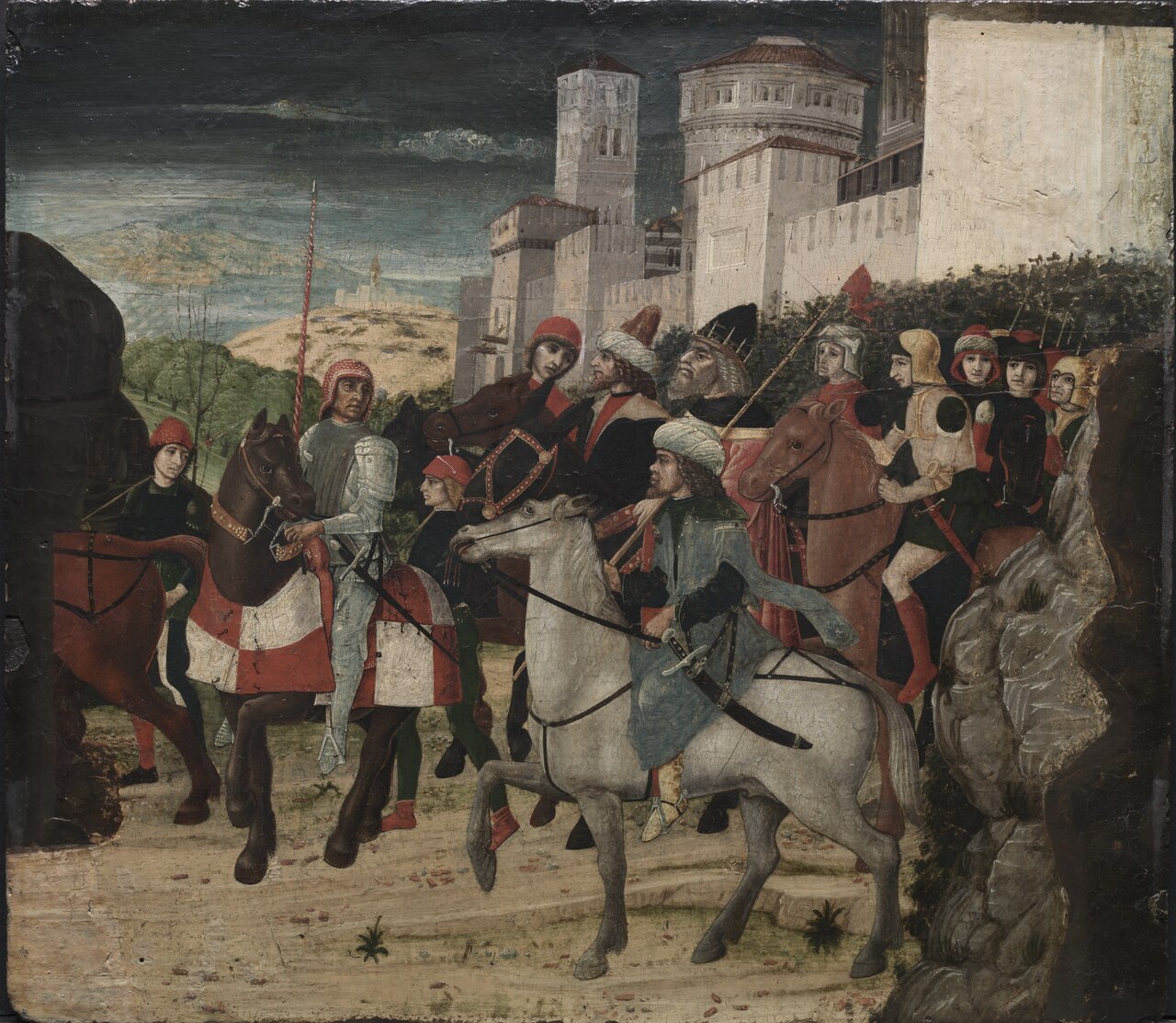
- Procession of the Magi (1470) – This earlier work demonstrates Parentino’s capacity for narrative complexity. A lively procession of richly dressed figures advances across a gently undulating landscape, each participant rendered with individualized facial features and sumptuous garments. The painting’s rhythmic movement and decorative borders reflect the artist’s dual interest in storytelling and ornamental design.
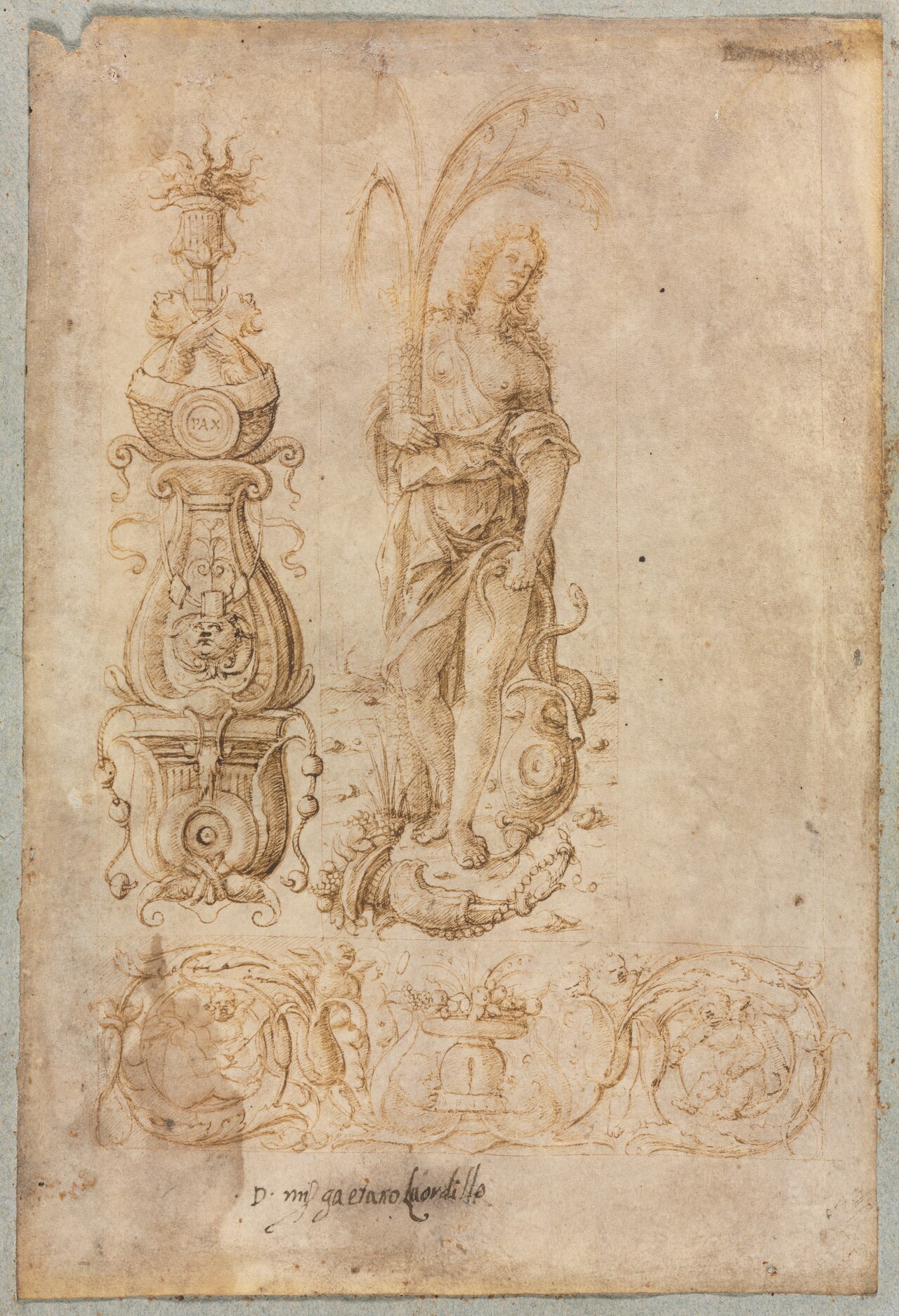
- Design for a Candelabrum – Although the actual metal object may not survive, the surviving drawing reveals Parentino’s facility with architectural ornament. The design combines classical columns with intricate foliage, creating a harmonious blend of structural and decorative elements suitable for liturgical use.
- Allegorical Figure of Abundance – In this allegorical sketch, Parentino personifies plenty through a female figure surrounded by fruit, grain and a cornucopia. The drawing showcases his ability to convey symbolic meaning through composition and detail, a skill that was prized by patrons seeking moral or didactic imagery.
- Ornamental Relief Design – This work exemplifies Parentino’s contribution to decorative arts. The relief design incorporates interlaced scrolls, grotesques and floral motifs, illustrating his command of pattern and his adaptability to various media beyond panel painting.
- Musicians – A genre scene depicting a group of musicians at leisure, this piece offers a glimpse of everyday life in Renaissance Veneto. The figures are rendered with a playful vitality, and the artist’s treatment of light on the instruments adds a tactile quality to the composition.
Influence and legacy Bernardo Parentino’s legacy is twofold. On the one hand, his paintings and designs enrich our understanding of the Venetian school’s regional diversity, especially in the context of Padua’s artistic milieu. His integration of colour, delicate modelling and ornamental detail contributed to a visual language that influenced later local workshops and helped disseminate Venetian aesthetic principles beyond the lagoon.
On the other hand, Parentino’s historical reputation has been complicated by a persistent confusion with a contemporary Augustine monk who shared his name and later became known as Fra Lorenzo. The monk, who died in the Monastery of St. Michael in Vicenza, has at times been mistakenly credited with works that belong to the painter. Modern scholarship, however, has increasingly clarified the distinction, allowing Parentino’s genuine oeuvre to be reassessed on its own merits.
Today, Parentino’s works are valued by collectors and museums for their lyrical quality and their embodiment of late‑Gothic and early‑Renaissance sensibilities within the Venetian tradition. While he may not enjoy the same fame as contemporaries such as Giovanni Bellini or Andrea Mantegna, his contributions remain an essential chapter in the narrative of Italian Renaissance art, illustrating the richness of artistic production across the Republic of Venice’s diverse territories.
Frequently asked questions
Who was Bernardo Parentino?
Bernardo Parentino (1437–1531) was a Venetian Renaissance painter born in Poreč who worked mainly in Padua, known for religious panels and decorative designs.
What artistic movement or style is he associated with?
He belonged to the Venetian school, combining the colouristic brilliance of Venice with emerging perspective and a strong decorative sensibility.
What are his most famous works?
His most recognised pieces include The Adoration of the Magi (1475), Saint Sebastian (1480), Procession of the Magi (1470), as well as designs for a candelabrum, an allegorical Figure of Abundance and various ornamental reliefs.
Why does he matter in art history?
Parentino illustrates the regional diversity of the Venetian Renaissance, linking religious narrative painting with ornamental design, and his work helped transmit Venetian visual ideals throughout the Republic.
How can I recognise a Bernardo Parentino painting?
Look for a luminous palette of warm reds and blues, finely drawn figures with delicate outlines, graceful drapery, and often a decorative border or intricate ornamental elements that complement the main scene.