Antonio Tarsia
1662 – 1739
In short
Antonio Tarsia (1662–1739) was a Venetian sculptor active in the early 18th century, renowned for his marble statues that blend Baroque dynamism with classical restraint. He taught and later became father‑in‑law to the celebrated sculptor Antonio Corradini, and his work helped shape the artistic climate of Venice in his time.
Notable works
._Juno.JPG)
_03.jpg)
Early life Antonio Tarsia was born in Venice in 1662, a city that was at the height of its artistic flourishing under the Republic of Venice. His family background is not well documented, but the capital’s vibrant workshop culture provided ample opportunity for a young talent to apprentice with established masters. Tarsia’s formative years were spent in the bustling studios of the city, where he absorbed the techniques of marble carving that had been honed by generations of Venetian sculptors.
Career and style By the turn of the 18th century Tarsia had established himself as a leading sculptor in Venice. His career coincided with a period when the Baroque style, characterised by dramatic movement and emotive expression, was giving way to a more measured classicism. Tarsia’s work reflects this transition: his figures display the energetic poses typical of the Baroque, yet they are tempered by a clear sense of proportion and a restrained, almost lyrical treatment of drapery. He received commissions from both public institutions and private patrons, producing works for churches, palaces and civic spaces. The majority of his surviving pieces are executed in marble, a material that suited his meticulous approach to surface finish and detail.
Signature techniques Tarsia’s sculptural technique is distinguished by several recurring elements. First, he employed a deep carving method that allowed for pronounced contrasts between light and shadow, enhancing the three‑dimensionality of his figures. Second, his handling of drapery demonstrates a careful study of fabric folds, often creating a sense of movement that appears to flow around the body rather than merely covering it. Third, Tarsia paid particular attention to the rendering of anatomical detail; muscles, veins and bone structure are suggested with subtle incisions, lending his figures a lifelike quality without resorting to overt realism. Finally, his finishing process involved a fine polishing that gave the marble a luminous sheen, a hallmark of Venetian marble sculpture of the period.
Major works Among Tarsia’s most celebrated sculptures are three works that exemplify his mature style. **Juno (1716)**, a marble representation of the Roman goddess, showcases his ability to convey divine authority through poised posture and a serene facial expression. The goddess’s flowing robes cascade in delicate folds, creating a rhythmic interplay of light that highlights the sculptor’s skill in rendering texture.
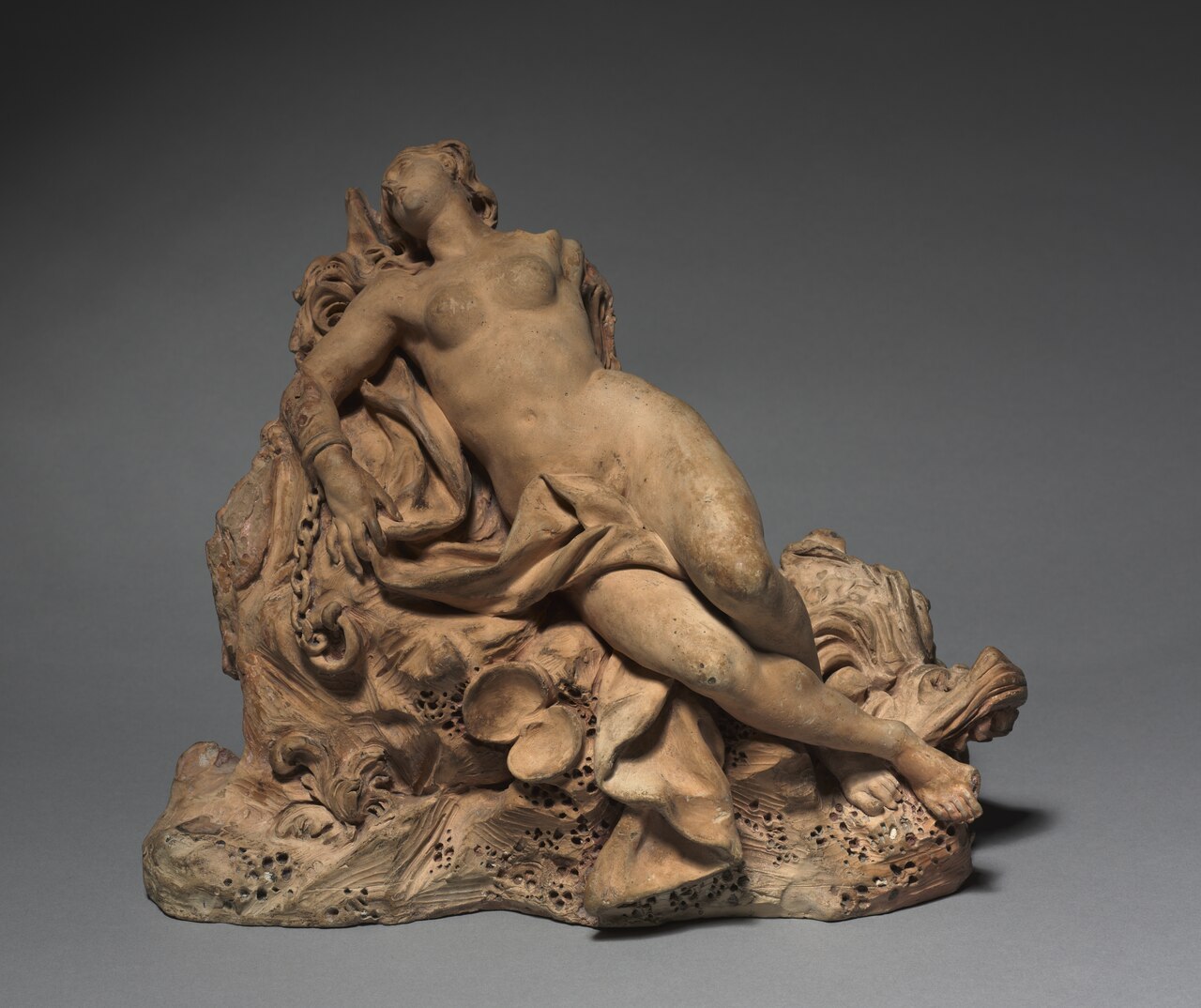
Andromeda, though undated, is another notable piece. The composition captures the mythic heroine at the moment of rescue, with her elongated neck and subtly turned torso suggesting both vulnerability and impending triumph. Tarsia’s treatment of the figure’s hair and the surrounding drapery demonstrates his command of movement within a static medium.
Hercules with the skin of the Nemean Lion (1711) presents the heroic labours of the demi‑god in a dynamic pose, the lion’s hide wrapped around his shoulders. Here, Tarsia balances muscular tension with the softness of the animal skin, achieving a contrast that underscores the narrative of strength and perseverance. The work’s dramatic gesture and the careful attention to the lion’s texture reflect the sculptor’s mastery of both human and animal forms.
These pieces, together with other commissions, cemented Tarsia’s reputation as a versatile artist capable of handling both allegorical and mythological subjects with equal finesse.
Influence and legacy Antonio Tarsia’s impact extended beyond his own output. He served as a mentor to the younger Antonio Corradini, who would later become a leading figure in Venetian sculpture and marry Tarsia’s daughter. Through this familial and professional link, Tarsia’s stylistic principles were transmitted to the next generation, influencing the evolution of Venetian sculpture into the late Baroque and early Rococo periods. Although his name is less widely recognised today than some of his contemporaries, Tarsia’s works remain integral to the artistic heritage of Venice, exemplifying the city’s capacity to fuse dramatic expression with classical elegance. Contemporary scholars regard his sculptures as valuable exemplars of early 18th‑century Venetian artistry, and his surviving statues continue to be exhibited in museums and public spaces, offering insight into the transitional aesthetics of his era.
Frequently asked questions
Who was Antonio Tarsia?
Antonio Tarsia (1662–1739) was a Venetian sculptor known for his marble statues that blend Baroque dynamism with classical restraint.
What artistic style or movement is Tarsia associated with?
His work sits at the crossroads of late Baroque and early Neoclassicism, combining dramatic poses with a measured, elegant treatment of form.
What are his most famous works?
Key works include the marble statues Juno (1716), Andromeda, and Hercules with the skin of the Nemean Lion (1711).
Why is Antonio Tarsia important in art history?
He was one of Venice’s most active early‑18th‑century sculptors and mentored Antonio Corradini, helping to shape the city’s sculptural tradition.
How can I recognise a sculpture by Antonio Tarsia?
Look for deep carving that creates strong light‑and‑shadow effects, finely polished marble, expressive drapery, and anatomically suggestive yet restrained figures.