Anne Mee
1765 – 1851
In short
Anne Mee (1765–1851) was an English miniature painter based in London who specialised in portrait miniatures of the British aristocracy during the late 18th and early 19th centuries. Her delicate brushwork and refined colour palette made her one of the most sought‑after miniaturists of her time.
Notable works
,_Marchioness_of_Donegall_MET_39630.jpg)

_by_John_Samuel_Agar,_after_Anne_Mee_(n%C3%A9e_Foldsone)_(cropped).jpg)

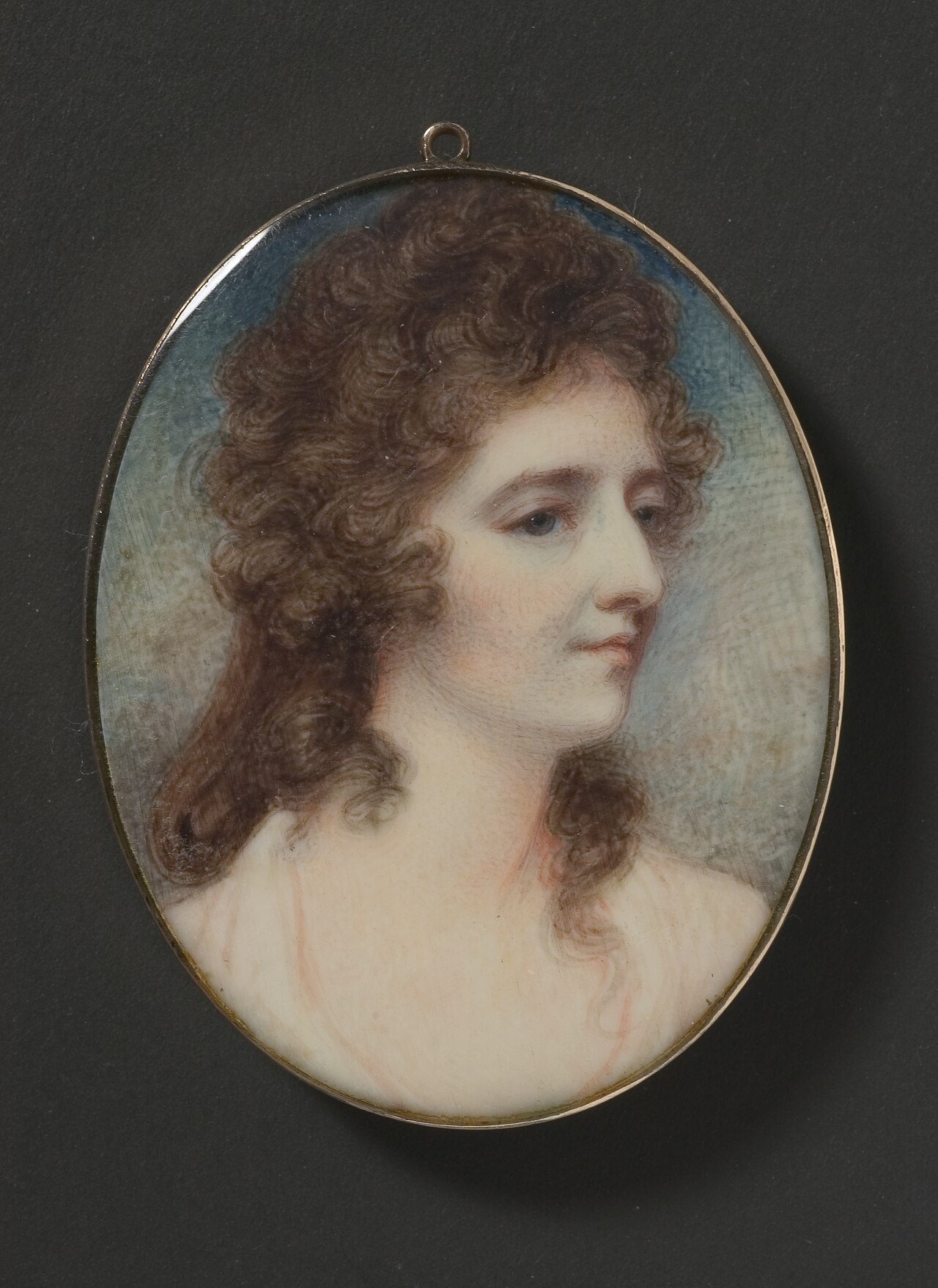
Early life Anne Mee was born Anne Foldsone in 1765 in London, the capital of the United Kingdom of Great Britain and Ireland. Little is recorded about her family background, but contemporary sources suggest she received a solid education that included drawing and painting—skills that were increasingly encouraged for women of the middle and upper classes in the Georgian period. By her teenage years she had begun to study the techniques of miniature painting, a genre that combined the intimacy of portraiture with the technical demands of working on a very small scale. The exact identity of her early mentors is not documented, though it is likely she trained in the ateliers of established miniature artists who were active in London’s vibrant art market.
Career and style Mee’s professional career emerged in the 1780s, a decade when miniature portraiture was at its height among the British elite. She quickly developed a reputation for capturing the elegance and subtle expression of her sitters, most of whom were members of the aristocracy and gentry. Her work was regularly exhibited at the Royal Academy’s summer exhibitions, a venue that offered visibility to artists of both genders. While she never aligned herself with a specific avant‑garde movement, Mee’s style reflects the prevailing neoclassical taste of the period, characterised by smooth modelling, restrained colour, and an emphasis on graceful composition.
Clients commissioned Mee to produce miniature portraits that could be exchanged as intimate tokens, set into lockets, or displayed in private cabinets. Her ability to render fine details—such as the texture of silk gowns, the sparkle of jewellery, and the delicate features of a face—made her a favourite among the socially prominent. By the early 1790s she was receiving commissions from notable families, a testament to both her technical skill and her capacity to navigate the patronage networks of Georgian society.
Signature techniques Anne Mee worked primarily in watercolor on prepared ivory, the standard support for miniature painting in her era. She employed a fine sable brush to lay down translucent washes that built up the flesh tones, a method that allowed for a luminous quality unattainable with opaque media. Her palette was often limited to muted earth tones punctuated by vivid blues and reds for clothing, a choice that reinforced the subtlety of the portrait while still drawing attention to the garment’s richness.
A hallmark of Mee’s technique was her meticulous rendering of hair and fabric. She would layer thin glazes to achieve the illusion of depth, and she used delicate hatching to suggest the play of light on silk or velvet. The background of her miniatures was typically a soft, neutral wash that kept the focus on the sitter’s face and attire. The combination of precise brushwork, careful modelling, and restrained composition became the visual signature that collectors and scholars associate with her oeuvre.
Major works Mee’s surviving portfolio includes several notable miniatures that illustrate both her artistic development and the range of her clientele.
* Portrait of a Woman, Possibly Barbara (1768–1829), Marchioness of Donegall (1790) – This miniature captures a young aristocratic lady, likely Barbara, Marchioness of Donegall, in an elegant pose. The sitter’s dress is rendered in a soft pastel silk, while the subtle shading of her face reflects Mee’s skill in conveying a sense of calm dignity.
* Portrait of a Woman, Said to Be Lady Sophia Boyle (1790) – In this work, Mee portrays Lady Sophia Boyle with a refined poise. The miniature highlights the delicate lace collar and the nuanced expression that suggests both confidence and modesty, hallmarks of Mee’s approach to high‑society portraiture.
* Jane Dalrymple‑Hamilton (née Duncan) (1812) – Created later in Mee’s career, this portrait demonstrates a slightly more relaxed handling of colour, yet retains the exacting detail for which she was known. The sitter’s hair is rendered with fine, almost translucent strokes, and the background is a muted ochre that frames the figure without distraction.
* Self‑portrait (1795) – A rare example of Mee turning the miniature format upon herself, this self‑portrait reveals the artist’s awareness of her own visual identity. The work shows a modestly dressed woman looking directly at the viewer, with a subtle smile that hints at both confidence and humility.
* Lady Margaret Stirling, m. Stuart – This miniature presents Lady Margaret Stirling, later Margaret Stuart, in a richly embroidered gown. Mee’s careful attention to the texture of the fabric and the sparkle of the jewellery underscores the status of the sitter while maintaining the intimate scale of the piece.
These works collectively illustrate Mee’s consistency in portraiture: a focus on the sitter’s social standing, an emphasis on fine detail, and a compositional balance that respects both the miniature format and the expectations of her elite patrons.
Influence and legacy Anne Mee’s career spanned the transition from the Georgian to the early Victorian period, a time when miniature painting began to wane in popularity due to the rise of photography. Nevertheless, her contributions cemented her place among the leading British miniaturists of the late eighteenth century. Her works are held in several public collections, including the National Portrait Gallery in London, where they continue to inform scholars about the visual culture of the British aristocracy.
Mee’s legacy is twofold. First, she demonstrated that women could achieve professional success in a highly competitive artistic field, serving as a model for later female artists who pursued portraiture. Second, her technical proficiency helped preserve the aesthetic standards of miniature painting, ensuring that the delicate art form retained its reputation for elegance and precision even as new technologies emerged. Contemporary exhibitions of Georgian miniatures frequently cite Mee as a reference point for quality and stylistic consistency, and art historians regard her miniatures as valuable primary sources for the study of fashion, social hierarchy, and personal identity in pre‑Victorian Britain.
In summary, Anne Mee remains an exemplar of British miniature portraiture, valued both for her artistic skill and for the insight her work provides into the visual and cultural world of her era.
Frequently asked questions
Who was Anne Mee?
Anne Mee (1765–1851) was an English miniature painter from London, renowned for her portrait miniatures of aristocratic women during the late 18th and early 19th centuries.
What style or movement is she associated with?
Mee worked within the neoclassical aesthetic prevalent in Georgian Britain, employing refined brushwork, restrained colour, and elegant composition without aligning with a specific avant‑garde movement.
What are her most famous works?
Notable miniatures include the Portrait of a Woman, Possibly Barbara, Marchioness of Donegall (1790), Portrait of a Woman, Said to Be Lady Sophia Boyle (1790), Jane Dalrymple‑Hamilton (1812), her Self‑portrait (1795), and Lady Margaret Stirling, m. Stuart.
Why does Anne Mee matter in art history?
She exemplifies the high level of technical skill in British miniature painting, provides insight into Georgian social elite, and serves as an early professional role model for women artists.
How can I recognise an Anne Mee miniature?
Look for a small watercolor on ivory with delicate, translucent flesh tones, finely rendered hair and fabric, a muted background, and the precise, graceful handling of detail typical of Mee’s work.