Alexander Stirling Calder
1870 – 1945
In short
Alexander Stirling Calder (1870–1945) was an American sculptor renowned for public monuments such as the Swann Memorial Fountain in Philadelphia and the Samuel Gross statue, and for teaching sculpture in the United States.
Notable works

.jpg)


Early life Alexander Stirling Calder was born on June 30, 1870, in Philadelphia, Pennsylvania, into a family already steeped in the visual arts. His father, Alexander Milne Calder, was a celebrated sculptor best known for the monumental statues that crown Philadelphia’s City Hall. Growing up in the shadow of his father’s studio, young Calder received an informal apprenticeship that introduced him to the practicalities of stone carving, bronze casting, and large‑scale composition. He attended the Pennsylvania Academy of the Fine Arts, where he studied drawing and anatomy, before moving to New York City to broaden his artistic horizons.
Career and style Calder’s professional career began in the 1890s, a period when American sculpture was transitioning from the grand historicism of the 19th century to a more varied, often allegorical, public art. He established a reputation for works that combined realistic figuration with a subtle sense of movement and narrative. While he never aligned himself with a single avant‑garde movement, his oeuvre reflects the influence of the Beaux‑Arts tradition, tempered by an emerging modern sensibility that favoured simplified forms and dynamic compositions. Throughout his career he taught at several institutions, most notably the Art Students League of New York, where he mentored a generation of sculptors.
In 1904 Calder earned a silver medal at the Louisiana Purchase Exposition (St. Louis World’s Fair) for his statue of the French‑Canadian explorer Philip François Renault. The award cemented his status as a leading figure in American monumental sculpture. After the death of Karl Bitter in 1915, Calder was appointed head of the sculpture program for the Panama‑Pacific International Exposition, a role that required him to oversee the creation and placement of numerous decorative and commemorative works across the San Francisco fairgrounds.
Signature techniques Calder’s technical repertoire was marked by a mastery of both traditional and innovative processes. He worked extensively in bronze, employing the lost‑wax casting method to achieve fine details and fluid lines. For stone commissions, he preferred marble and limestone, where he exploited the natural veining to enhance the sense of depth. A recurring hallmark of his style is the integration of sculpture with architectural or landscape settings, allowing his figures to interact with surrounding elements—water, light, and surrounding structures—to convey narrative or symbolic meaning. His treatment of surface texture varies from highly polished finishes on focal points to a more tactile, patinated approach on secondary surfaces, creating visual contrast within a single piece.
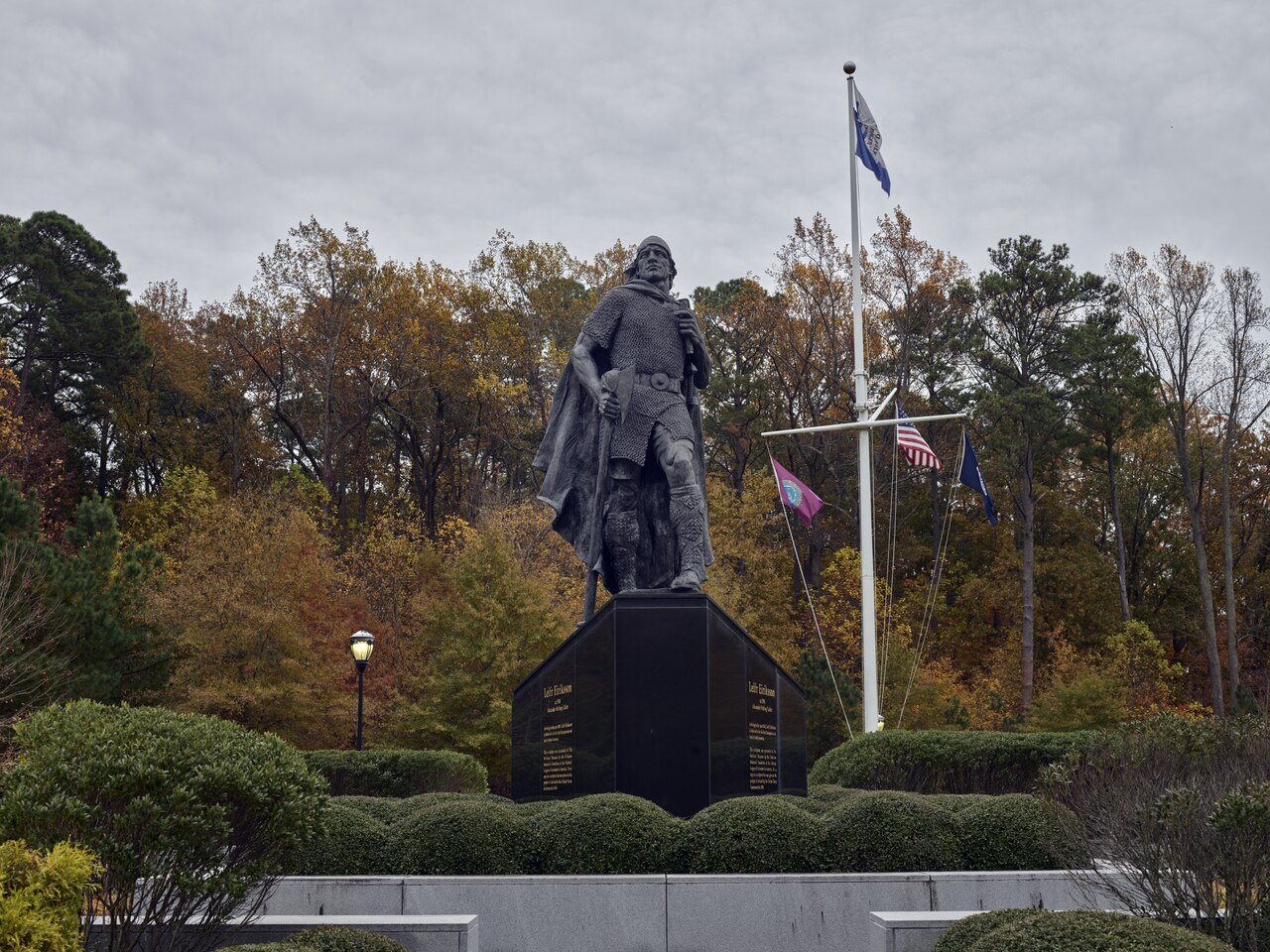
Major works - **Swann Memorial Fountain (1924)** – Located in Philadelphia’s Logan Square, this fountain consists of three bronze figures representing the three ages of man: Child, Youth, and Adult. The figures emerge from a stylised water jet, embodying the fluidity of life and the city’s commitment to public art. The fountain remains a focal point of the city’s civic space and a testament to Calder’s ability to blend allegory with kinetic design. - **Samuel Gross (1897)** – This bronze statue, commissioned by the University of Pennsylvania, portrays the eminent surgeon Dr Samuel D. Gross. The work captures the physician in a dignified, contemplative pose, reflecting Calder’s skill in rendering likeness while imbuing the subject with intellectual gravitas. - **Statue of Leif Erikson (Reykjavík) (1932)** – Erected in Iceland’s capital, this bronze monument commemorates the Norse explorer Leif Erikson. Calder’s rendition shows the explorer in a forward‑leaning stance, hand extended, symbolising discovery and the bridging of cultures. The work was a diplomatic gift and illustrates Calder’s capacity to address historical themes on an international stage. - **Statue of Leif Erikson (Newport News, Virginia)** – A companion piece to the Reykjavík monument, this version was installed in the United States to honour the explorer’s voyages and the shared heritage of seafaring nations. Though smaller in scale, it retains the same dynamic composition. - **Fountain of Energy (1915)** – Created for the Panama‑Pacific International Exposition, this work combined sculpture with water engineering to produce a kinetic display that celebrated the industrial optimism of the early 20th century. The fountain’s sleek lines and rhythmic water flow exemplify Calder’s interest in movement and public spectacle.
In addition to these pieces, Calder contributed sculptural elements to the Washington Square Arch in New York City and the Depew Memorial Fountain in Indianapolis, further underscoring his role in shaping the visual identity of American public spaces.
Influence and legacy Alexander Stirling Calder’s legacy lies in his synthesis of classical training with a modern public‑art ethos. His works remain prominent fixtures in city centres, where they continue to engage audiences through their narrative clarity and technical excellence. As a teacher, Calder influenced notable sculptors such as Paul Manship and William Zorach, extending his impact beyond his own creations. Moreover, his son, the celebrated painter and muralist Alexander Calder (1909–1976), carried forward the family’s artistic tradition, ensuring that the Calder name remained synonymous with American art throughout the 20th century. Today, scholars regard Calder as a bridge between the academic sculpture of the 19th century and the more experimental public monuments that emerged in the interwar period, a testament to his adaptability and enduring relevance.
Frequently asked questions
Who was Alexander Stirling Calder?
He was an American sculptor (1870–1945) known for public monuments such as the Swann Memorial Fountain and the Samuel Gross statue, and for teaching sculpture in the United States.
What artistic style or movement is Calder associated with?
Calder worked within the Beaux‑Arts tradition while incorporating a modern sense of movement and simplified forms; he did not belong to a single avant‑garde movement.
What are Calder’s most famous works?
His most celebrated pieces include the Swann Memorial Fountain (1924) in Philadelphia, the Samuel Gross statue (1897), the Leif Erikson statues in Reykjavík (1932) and Newport News, and the Fountain of Energy (1915) for the Panama‑Pacific Exposition.
Why is Alexander Stirring Calder important in art history?
He helped define early‑20th‑century American public sculpture, merging classical technique with dynamic, narrative-driven designs, and he mentored a generation of influential sculptors.
How can I recognise a Calder sculpture?
Look for realistic figuration combined with fluid, often kinetic composition, a careful integration with its architectural or landscape setting, and a mix of polished and textured surfaces.