Albert Cornelis
1465 – 1532
In short
Albert Cornelis (1465–1532) was a Burgundian Netherlandish painter of the early 16th century, active mainly in Bruges. He produced religious panels and portraits that reflect the Flemish Renaissance style, though his precise artistic affiliation remains uncertain.
Notable works

.jpg)


Early life Albert Cornelis was born in 1465 within the territories of the Burgundian Netherlands, a region that encompassed much of modern‑day Belgium and the Netherlands. The exact location of his birth is not recorded, a common situation for many artists of the period whose early documentation has been lost or never created. Growing up in a cultural milieu that prized guilds and workshop apprenticeships, Cornelis would have been exposed to the flourishing artistic activity centred on cities such as Bruges, Ghent and Antwerp. Training for a painter at that time typically began with an apprenticeship under an established master, where the apprentice learned to prepare panels, mix pigments, and copy the works of senior artists. Although the name of Cornelis’s master is not documented, the prevailing influence of the Early Netherlandish tradition, combined with the emerging Italianate ideas that were reaching the Low Countries, would have shaped his formative years.
Career and style By the early 1500s Albert Cornelis had established himself as a professional painter in Bruges, a city that remained a major commercial and artistic hub despite the political upheavals of the late 15th century. The city’s patrons included members of the urban elite, ecclesiastical institutions, and guilds, all of whom commissioned works for private devotion and public display. Cornelis’s output reflects the transitional character of Flemish art at the time: he retained the meticulous attention to detail and rich colour that defined the earlier Netherlandish masters, while also incorporating the softer modelling of forms and greater spatial coherence associated with the Italian Renaissance. His paintings often combine a devotional subject with a landscape or interior that provides a sense of depth, a hallmark of the period’s evolving visual language.
Signature techniques Cornelis worked primarily in oil on wood panel, the medium that had become standard in the Low Countries for its versatility and luminous quality. He employed a layered glazing technique, building up thin, translucent layers of pigment to achieve a subtle modelling of flesh and fabric. This method allowed for the delicate rendering of skin tones, especially in his depictions of the Virgin and saints, and contributed to the gentle atmospheric effects seen in his landscapes. His brushwork varies between fine, almost stippled detail in the rendering of textiles and foliage, and broader, more expressive strokes in the treatment of background skies. Cornelis also demonstrated a keen eye for naturalistic observation; the foliage in his landscapes often displays accurate botanical forms, while the drapery follows the underlying anatomy of the figure, suggesting a solid understanding of both observation and studio practice.
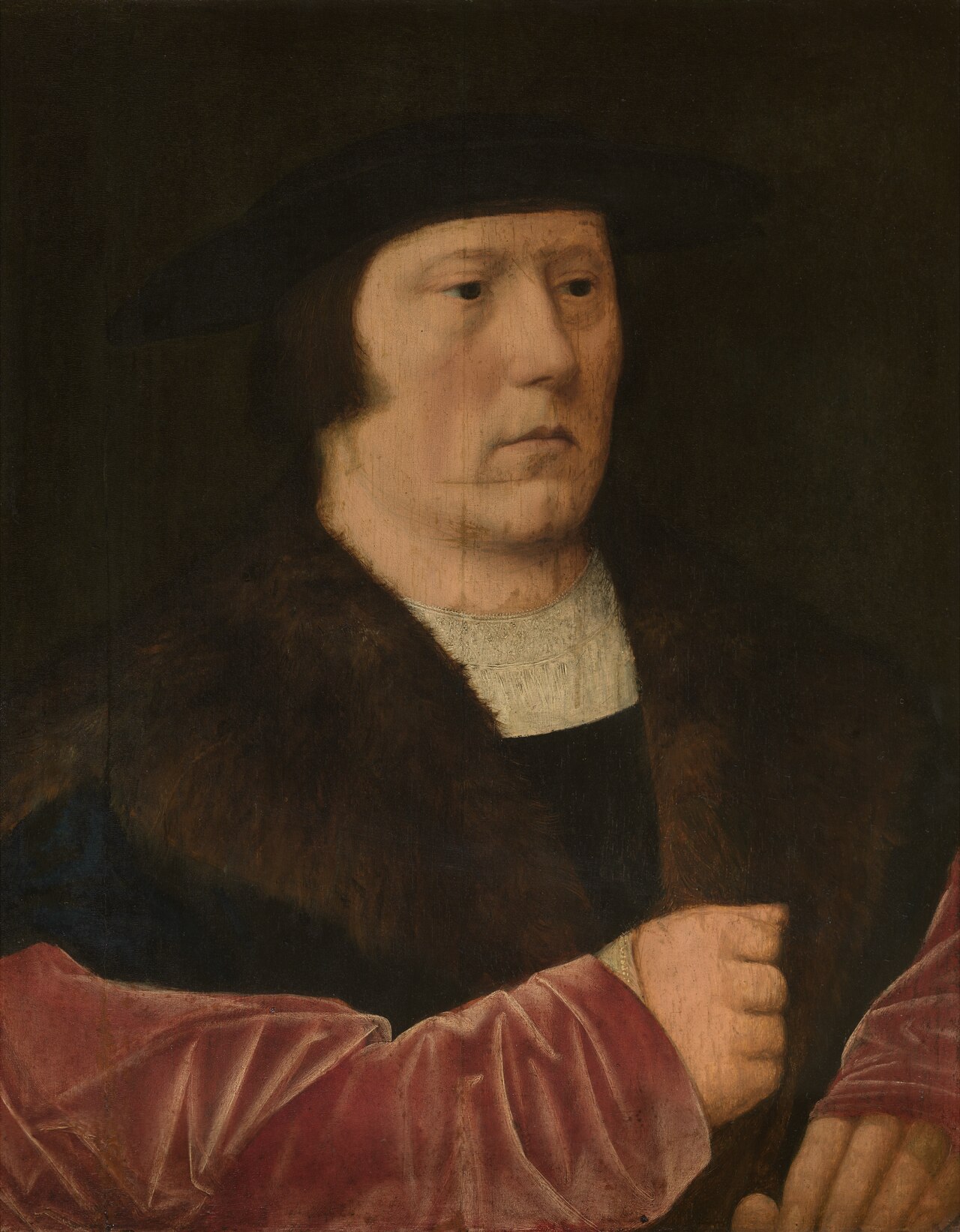
Major works - **The Magdalen in a Landscape (1510)** – This early‑dated panel presents Mary Magdalene seated beneath a leafy arbor, her hands clasped in prayer. The figure is rendered with a calm, introspective expression, while the surrounding trees are depicted with remarkable botanical precision. The work exemplifies Cornelis’s ability to blend a devotional subject with a convincing natural setting, a synthesis that was gaining popularity in the early 16th‑century Flemish oeuvre. - **Crowning of Mary (1517)** – Created for a local confraternity, this altarpiece shows the Virgin being crowned by angels amidst a luminous sky. The composition is balanced, with the central figure of Mary illuminated by a soft light that distinguishes her from the surrounding celestial beings. The delicate handling of the gold‑leaf halo and the fine detailing of the angels’ wings reveal Cornelis’s meticulous technique. - **Assumption of the Virgin (1515)** – In this larger panel, the Virgin ascends into heaven, surrounded by a crowd of adoring figures. The dynamic upward movement is achieved through a carefully constructed perspective that leads the viewer’s eye toward the celestial realm. The lower register contains a detailed crowd of saints, each rendered with individualized features, highlighting Cornelis’s skill in portraiture within a narrative context. - **Portrait of a Man (1525)** – This sober portrait captures a gentleman, possibly a merchant or a civic official, in three‑quarter view. The sitter’s attire, a dark doublet with a modest collar, and the subtle play of light across his face, illustrate Cornelis’s capacity for psychological depth. The background is rendered with a muted, almost abstracted landscape that serves to focus attention on the figure. - **The Virgin and Child in a Landscape (1525)** – One of Cornelis’s later works, this panel depicts the Virgin holding the infant Christ, set against a gently rolling countryside. The composition is intimate, with the figures positioned near the foreground, creating a sense of immediacy. The landscape background, rendered in soft greens and blues, provides a serene backdrop that enhances the devotional quality of the scene.
Influence and legacy Albert Cornelis occupies a modest but noteworthy place in the narrative of Flemish Renaissance painting. While he did not achieve the fame of contemporaries such as Jan van Scorel or Pieter Bruegel the Elder, his work exemplifies the regional adaptation of Renaissance ideals within the Burgundian artistic tradition. The surviving panels demonstrate a consistent quality of execution and a clear engagement with the evolving visual language of his time. Because documentary evidence about his life and workshop is scarce, art historians rely heavily on stylistic analysis to situate Cornelis within the broader currents of early 16th‑century Netherlandish art. His paintings, particularly those that combine religious subjects with naturalistic landscapes, anticipate later developments in Flemish landscape painting, suggesting that his approach contributed, however subtly, to the genre’s evolution. Today, his works are valued by collectors and museums for their quiet beauty, technical finesse, and as representative examples of the transitional period between the Late Gothic and the High Renaissance in the Low Countries.
Frequently asked questions
Who was Albert Cornelis?
Albert Cornelis (1465–1532) was a Burgundian Netherlandish painter active in Bruges during the early 16th century, known for religious panels and portraits that blend Late Gothic detail with emerging Renaissance styles.
What artistic style or movement is he associated with?
Cornelis is linked to the Flemish Renaissance, a regional expression of Renaissance ideas that retains the meticulous detail of the Netherlandish tradition while adopting softer modelling and spatial depth.
What are his most famous works?
His most recognised pieces include *The Magdalen in a Landscape* (1510), *Crowning of Mary* (1517), *Assumption of the Virgin* (1515), *Portrait of a Man* (1525), and *The Virgin and Child in a Landscape* (1525).
Why is Albert Cornelis important in art history?
He exemplifies the transitional phase of early 16th‑century Flemish art, demonstrating how Northern artists incorporated Renaissance concepts, and his work contributes to understanding the development of religious and landscape painting in the Low Countries.
How can I recognise a painting by Albert Cornelis?
Look for finely glazed oil surfaces, detailed foliage, calm devotional figures set within naturalistic landscapes, and a subtle, luminous colour palette that balances Northern detail with Renaissance modelling.