Aertgen van Leyden
1498 – 1564
In short
Aertgen van Leyden (1498–1564) was a Dutch painter, draughtsman and glass‑designer from Leiden in the Habsburg Netherlands, known for religious panels and stained‑glass designs that blend northern Renaissance realism with a personal devotional intensity.
Notable works
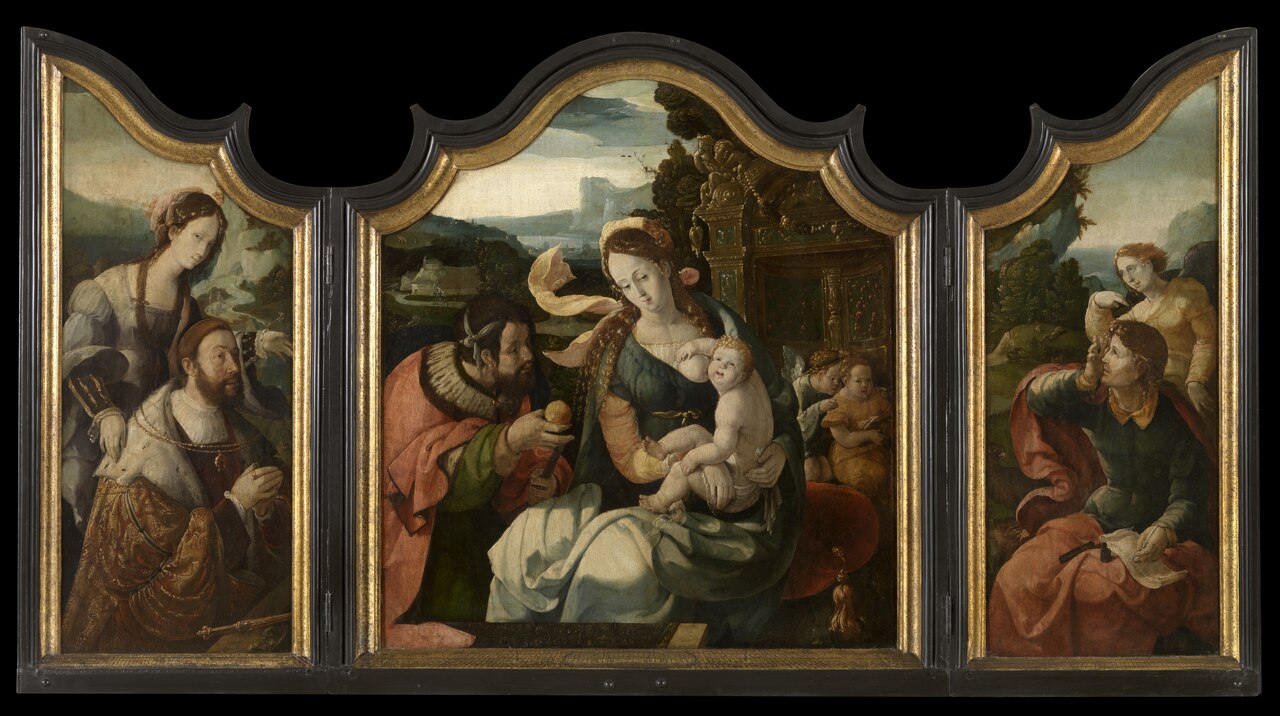


Early life Aertgen Claesz. van Leyden was born in Leiden in 1498, a prosperous city in the Habsburg Netherlands that sat at the crossroads of trade routes between the Low Countries and the German lands. Little is recorded about his family background, but the patronymic *Claesz* indicates he was the son of a man called Claes. Leiden, at the turn of the 16th century, was a centre of humanist learning and a hub for artists who travelled to Antwerp, Brussels and the court of Charles V. It is probable that van Leyden received his initial training in a local workshop, where he would have learned the fundamentals of panel painting, drawing and the emerging techniques of glass design.
Career and style By the 1520s van Leyden had established himself as an independent artist working for churches, civic patrons and private collectors. His oeuvre reflects the transition from the late Gothic sensibility of the early Netherlandish masters to the more naturalistic, anatomically precise style of the northern Renaissance. He combined a keen observation of human expression with an attention to detail in textiles, architecture and landscape that situates his figures within a believable world. Although there is no single movement that claims him as a member, his work aligns with the broader currents of the Dutch Renaissance, characterised by a renewed interest in classical composition, balanced proportion and the use of chiaroscuro to model form.
Van Leyden was also a prolific draughtsman. His surviving sketches display a fluid, confident line that suggests he used drawing both as a preparatory tool for panel paintings and as an independent medium for study. In addition, he designed stained‑glass windows for a number of churches in Leiden and surrounding towns. The surviving fragments show a deft handling of colour and light, echoing the narrative clarity of his painted works.
Signature techniques Several technical traits help to identify a van Leyden work:
* Layered glazing – He built colour through successive translucent glazes, a method that lends his figures a luminous flesh tone and deepens the atmospheric background. * Linear emphasis on drapery – The folds of clothing are rendered with precise, slightly exaggerated lines that both define form and convey movement. * Expressive facial typology – Van Leyden favoured slightly elongated faces with down‑turned eyes and subtly furrowed brows, conveying a contemplative solemnity. * Use of architectural framing – Many of his panels are set within arches or windows that create a visual portal between the viewer and the sacred scene. * Integration of symbolic details – Objects such as lilies, gold coins or cracked stones appear with deliberate iconographic intent, enhancing the theological message.
These elements, when taken together, create a distinct visual language that art historians use to attribute unsigned works to the artist.
Major works The surviving corpus of van Leyden includes several documented commissions that illustrate his range.
* Triptych of Count Henry III of Nassau (1549) – This altarpiece, now housed in the Rijksmuseum, was created for the private chapel of Count Henry III. The central panel depicts the *Annunciation* flanked by saints, while the side panels portray the count’s patron saints. The composition demonstrates van Leyden’s skill in integrating portraiture with devotional narrative, as the donor is shown kneeling in a realistic, three‑dimensional space.
* Nativity (1550) – Also in the Rijksmuseum, this work presents the birth of Christ with a warm, domestic interior. Van Leyden’s handling of light—soft dawn filtering through a modest window—creates an intimate atmosphere that contrasts with the more formal, celestial depictions common in earlier Netherlandish art.
* Adoration of the Magi (1536) – Held by the Stedelijk Museum De Lakenhal, this panel showcases a crowded, bustling scene of the three kings presenting gifts. The artist’s attention to the varied textures of exotic fabrics and the careful placement of each figure within a unified architectural setting exemplify his compositional mastery.
* The Calling of Saint Anthony (1530) – This work, now in the Metropolitan Museum of Art, captures the moment Saint Anthony is summoned by a vision. Van Leyden uses dramatic chiaroscuro to highlight the saint’s startled expression, while the surrounding landscape recedes into shadow, underscoring the mystical encounter.
* The Raising of Lazarus (attributed, 1630) – Although the dated 1630 is post‑humous, the panel—in the Museo Thyssen‑Bornemisza—has been linked to van Leyden on stylistic grounds. The painting’s powerful use of colour, the dynamic arrangement of the resurrected Lazarus and the surrounding figures, and the characteristic treatment of drapery align closely with his established oeuvre. The dating discrepancy is generally explained as a later re‑dating or an error in the museum catalogue.
These works collectively illustrate his focus on biblical narratives, his ability to convey emotion, and his commitment to a synthesis of Northern detail and Italianate compositional balance.
Influence and legacy Aertgen van Leyden operated in a period of intense artistic exchange across the Low Countries. While he never achieved the fame of contemporaries such as Jan van Scorel or Pieter Bruegel the Elder, his work contributed to the diffusion of Renaissance ideas into the Dutch provinces. His panels were admired by local patrons for their devotional intensity and by fellow artists for their technical proficiency. The surviving stained‑glass designs demonstrate an early integration of Renaissance pictorial principles into the medium of glass, influencing later Dutch glass‑makers.
In the centuries after his death, van Leyden’s paintings were collected by museums in Amsterdam, Leiden, New York and Madrid, ensuring that his contribution to the northern Renaissance remained visible to scholars and the public. Contemporary exhibitions of Dutch Renaissance art frequently include his panels as exemplars of the period’s transitional aesthetics. Moreover, his meticulous draftsmanship continues to be studied by art students who seek to understand the blend of Gothic tradition and emerging naturalism that defined the era.
Overall, Aertgen van Leyden stands as a representative figure of the Habsburg Netherlands’ artistic landscape—a painter who combined technical skill, devotional depth and a subtle embrace of Renaissance ideals, leaving a body of work that enriches our understanding of 16th‑century Dutch art.
Frequently asked questions
Who was Aertgen van Leyden?
Aertgen van Leyden (1498–1564) was a Dutch painter, draughtsman and stained‑glass designer from Leiden, active during the northern Renaissance.
What artistic style or movement is he associated with?
He is not tied to a single movement, but his work reflects the Dutch Renaissance, merging late Gothic detail with Renaissance naturalism and balanced composition.
What are his most famous works?
Key works include the Triptych of Count Henry III of Nassau (1549), Nativity (1550), Adoration of the Magi (1536), The Calling of Saint Anthony (1530) and the attributed Raising of Lazarus.
Why is Aertgen van Leyden important in art history?
He helped transmit Renaissance ideas into the Dutch provinces, especially through his panel paintings and innovative stained‑glass designs, influencing later Dutch artists.
How can I recognise a painting by Aertgen van Leyden?
Look for layered glazing, precise drapery lines, slightly elongated solemn faces, architectural framing, and symbolic details that together create a quiet, devotional atmosphere.