Aert Mijtens
1541 – 1602
In short
Aert Mijtens (1541–1602) was a Flemish Renaissance painter from Brussels who spent most of his career in Italy, producing altarpieces for churches in Rome. He is best known for works such as The Scourging of Christ (1599) and The Death of Cleopatra (1587).
Notable works
_-_The_Death_of_Cleopatra_-_RCIN_406053_-_Royal_Collection.jpg)

Early life Aert Mijtens was born in 1541 in Brussels, a bustling centre of the Habsburg Netherlands renowned for its thriving artistic workshops. Little is recorded about his family background, but the city’s vibrant guild system suggests that he was likely apprenticed to a local master painter during his teenage years. This early training would have familiarised him with the Northern Renaissance idiom—meticulous observation, layered oil technique, and a keen interest in religious narrative—foundational skills that he later adapted to the Italian context.
Career and style Around the mid‑16th century, a wave of Netherlandish artists travelled to Italy in search of patronage and artistic exchange. Mijtens joined this migration, arriving in Rome sometime in the 1560s. The capital’s bustling workshop environment, dominated by the papal commissions and the burgeoning Counter‑Reformation, offered him opportunities to work on large‑scale ecclesiastical projects. He quickly established a reputation for producing altarpieces that combined the detailed realism of his Flemish roots with the compositional dynamism favoured by Italian contemporaries.
Mijtens’ style is emblematic of the late Renaissance synthesis. His figures retain the sculptural solidity and fine modelling typical of Flemish painting, while his use of colour and spatial arrangement reflects the influence of Roman masters such as Michelangelo and Raphael. He employed a balanced palette of deep reds, golden ochres and muted blues, creating a sense of solemnity appropriate for devotional subjects. The emotional intensity of his narratives often derives from subtle gestures and facial expressions rather than overt theatricality, a hallmark of his hybrid aesthetic.
Signature techniques Mijtens is noted for a few technical hallmarks that help identify his hand. First, his underpainting frequently utilizes a grisaille layer, allowing the subsequent oil glazes to achieve luminous depth. Second, he favours a fine, almost invisible brushwork for flesh tones, contrasting with broader, more expressive strokes in drapery and background architecture. Third, his compositions often incorporate a carefully calculated perspective that draws the viewer’s eye toward a central focal point—typically the Christ figure or a pivotal moment in the narrative. Finally, he occasionally includes small, detailed still‑life elements—such as a wilted lily or a cracked marble column—that serve both symbolic and compositional purposes.
Major works Among the works attributed to Aert Mijtens, three stand out for their historical significance and artistic quality.
* The Scourging of Christ (1599) – Executed for a Roman church, this altarpiece captures the moment of Christ’s flagellation with a restrained yet powerful emotional tone. The central figure of Christ is rendered with a luminous flesh quality, his torso illuminated against a darkened background that heightens the drama. Mijtens places the tormentors in the periphery, their gestures suggested rather than overt, allowing the viewer to focus on the suffering saint.
* The Death of Cleopatra (1587) – This rare mythological subject demonstrates Mijtens’ versatility beyond strictly religious themes. Cleopatra is depicted in a reclining pose, her veil slipping to reveal a tranquil expression despite the surrounding chaos of her demise. The work showcases his skillful handling of textiles and the interplay of light on marble and gold, revealing a sophisticated understanding of classical motifs.
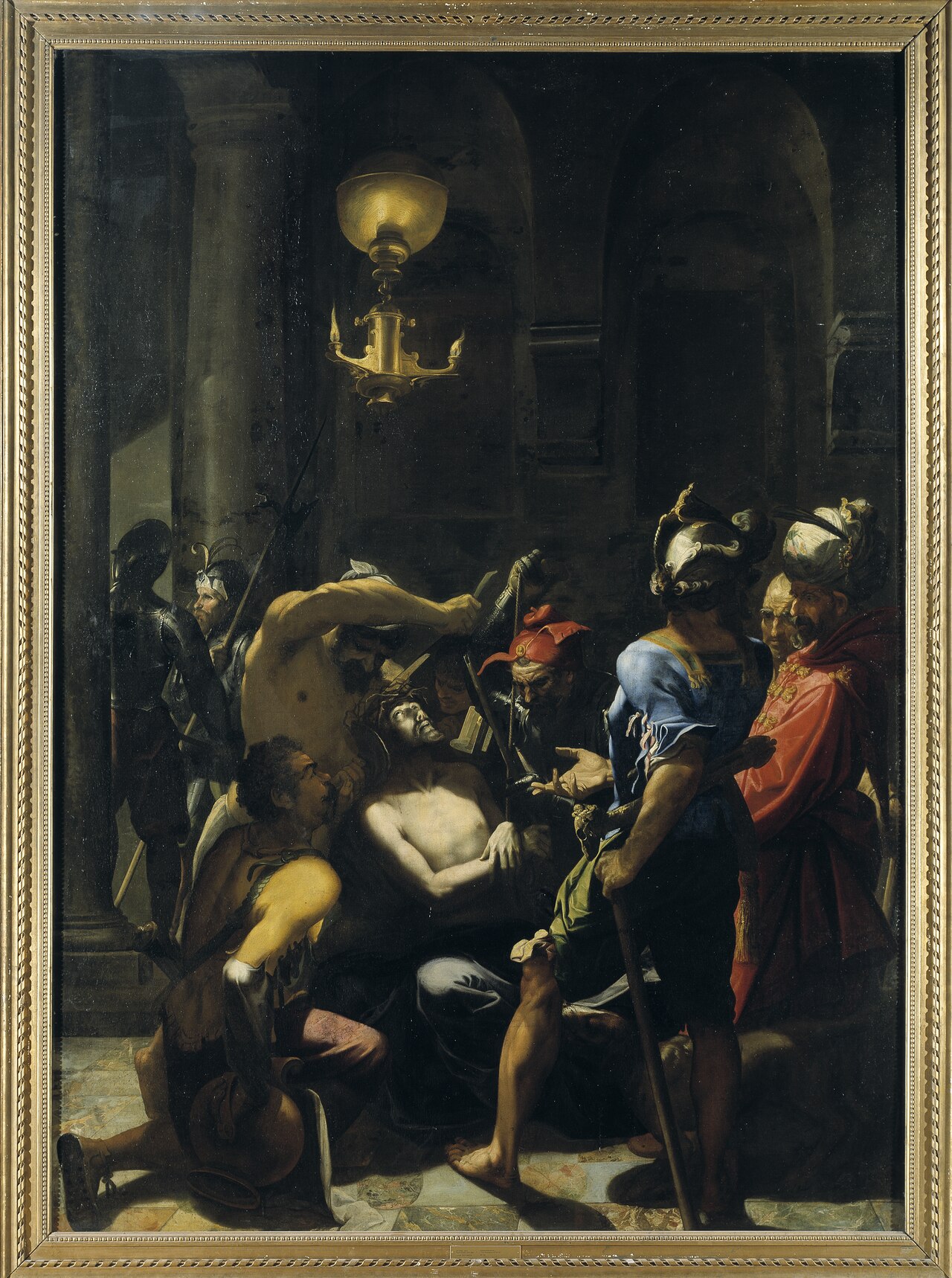
* Christ Crowned with Thorns (1601) – One of his final commissions, this painting revisits the Passion narrative with heightened emotional intensity. The crown of thorns is rendered with a tactile realism that contrasts with the soft, almost ethereal rendering of Christ’s visage. Mijtens employs a dramatic chiaroscuro, casting deep shadows that amplify the sense of suffering while maintaining a compositional harmony that guides the eye toward the central figure.
These works illustrate Mijtens’ ability to meld Flemish detail with Roman grandeur, creating paintings that resonated with both local patrons and the broader European market.
Influence and legacy Although Aert Mijtens is not as widely known as some of his contemporaries, his career exemplifies the cultural exchange between the Low Countries and Italy during the late Renaissance. By integrating Northern techniques into the Roman artistic milieu, he contributed to a stylistic dialogue that would influence later Baroque painters who sought to combine realism with dramatic expression. His altarpieces continued to be displayed in Roman churches well into the 17th century, serving as visual exemplars for younger artists navigating the tensions between devotional restraint and theatricality.
Modern scholarship recognises Mijtens as a bridge‑figure, illustrating how Flemish artists adapted to the demands of Italian patronage while preserving the meticulous craftsmanship of their homeland. His works remain valuable for studying the diffusion of artistic ideas across Europe and for appreciating the nuanced ways in which individual painters negotiated identity, market, and faith in a rapidly changing artistic landscape.
Frequently asked questions
Who was Aert Mijtens?
Aert Mijtens was a Flemish Renaissance painter (1541–1602) born in Brussels who spent most of his career in Rome, producing altarpieces for churches.
What artistic movement did he belong to?
He worked within the Renaissance, blending the detailed realism of the Northern Renaissance with the compositional dynamism of Italian art.
What are his most famous works?
His most renowned paintings include The Scourging of Christ (1599), The Death of Cleopatra (1587) and Christ Crowned with Thorns (1601).
Why is Aert Mijtens important in art history?
He exemplifies the cross‑cultural exchange between the Low Countries and Italy, influencing later artists by merging Flemish technique with Roman aesthetics.
How can I recognise a painting by Aert Mijtens?
Look for finely modelled figures, a subtle grisaille underpainting, delicate flesh tones contrasted with broader drapery strokes, and a balanced composition that directs focus to a central devotional figure.